One page per job type, so the quote request arrives usable.
Extensions, loft conversions and bathroom refits attract different homeowners with different budgets, and one generic contact form flattens them into enquiries you cannot price. Each page speaks to one job, shows that job done, and asks for the four things a realistic quote needs — including photographs.
What they came to find out
Every visitor arrives holding four questions.
- Have you done work like mine?
- Do you cover my area?
- Are you insured and certified?
- How long until you could start?
A business website earns its keep by answering those before anything else. Everything below is in service of that, not of looking impressive.
Construction concept · Not client work
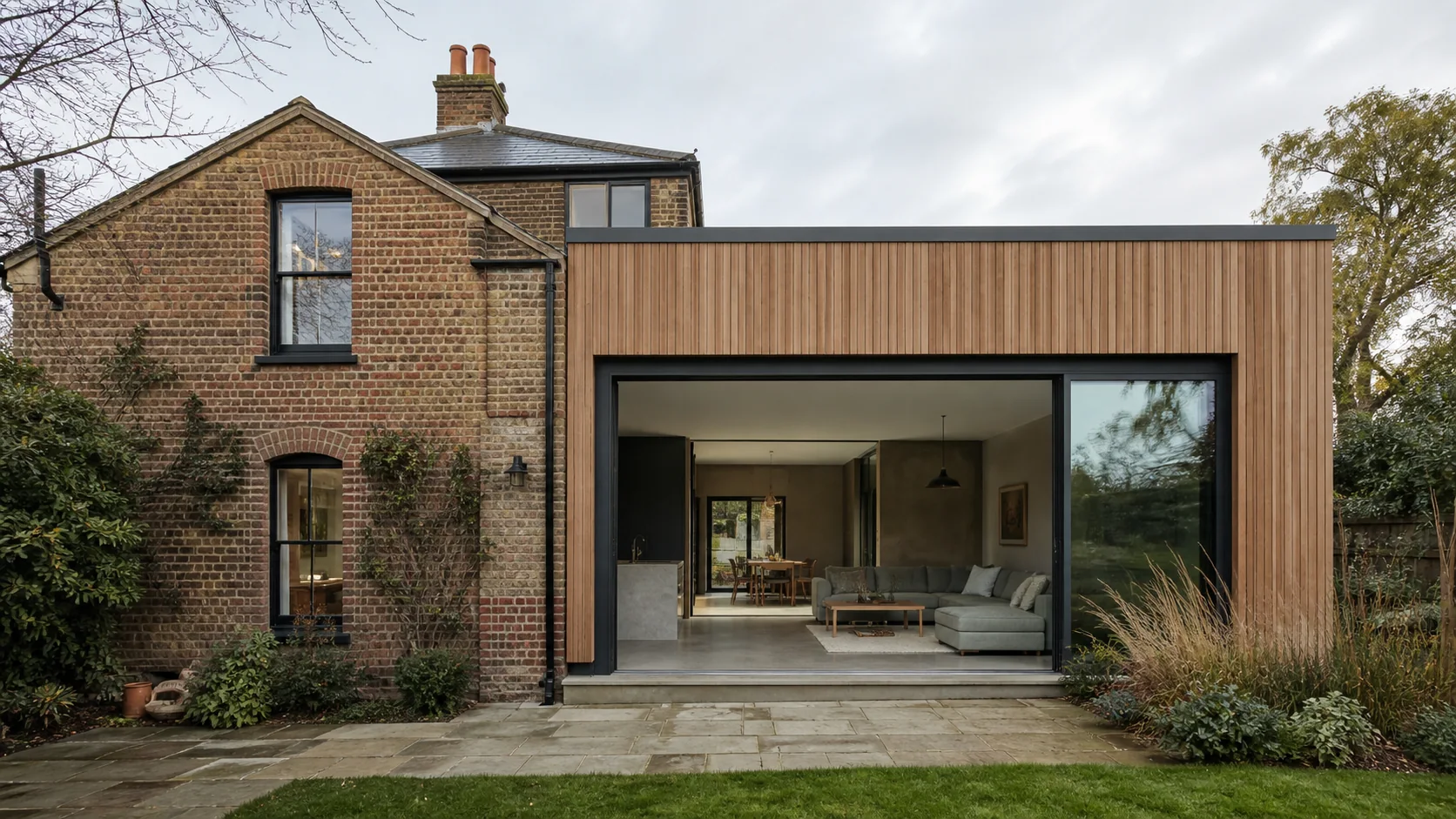
Built for
Building, renovation and specialist trade businesses whose reputation is local and whose leads arrive on a phone.
What usually goes wrong
- The portfolio is a folder of unsorted phone photos with no before, no after and no context.
- The service area is never stated, so half the enquiries are outside it.
- Certifications and insurance are mentioned nowhere, on a page about letting strangers into a home.
- The only contact route is a form, on a site being read from a van.
Every trade proves itself differently.
These are the four things a business has to establish before an enquiry is even considered.
The area you actually cover
Certifications and insurance, stated
A number that dials with one tap
What a landing page actually includes.
Scoped to builders and trades — the same service, ordered around how this kind of buyer decides.
- One page, one offer, one primary action
- Message matched to the ad or campaign that brings people there
- Objection handling in the order the objections actually arrive
- A short form that asks only what a first reply needs
- UTM and lead-source capture so spend can be traced to enquiries
- Fast, lightweight build — a slow landing page wastes the click you paid for
Four stages, each with a decision in it.
Timeline depends on scope and content readiness, and is agreed before work begins rather than promised as a number.
Match
Read the ad, the audience and the promise being made, so the page opens with the sentence the click was expecting.
Sequence
Order the page around the questions this buyer asks, in the order they ask them, ending at one action.
Build
A lean page that renders fast on mobile data, because most paid traffic is a phone on a bad connection.
Instrument
Campaign parameters, source capture and event structure, so the next round of spend is decided on evidence.
Signature website
One complete website, from first sketch to live on your own domain.
The pages we agree on, designed and built for your business. What is included, how many rounds of changes you get, and when it goes live are all written down before you pay anything.
Project fee$600USD
- A site designed for your business alone — never a template
- Looks and works right on phones, tablets and desktops
- An enquiry form that reaches your inbox and a private sheet you own
- Every enquiry tagged with where it came from — search, ads, social, referral
- Set up properly for Google from day one
- Fast pages, checked for speed and readability before launch
- Small touches of motion where they help, never where they slow you down
- Put live on your own domain, then checked live — not just in preview
- The site, the files and plain-English notes are yours to keep
- Most sites go live in 2–3 weeks
Questions for this kind of project
Scope before assumptions.
The business-specific answers first, then the ones about conversion landing pages itself.
01Do I need a quote calculator?
Almost never. A calculator that guesses produces quotes you have to walk back, which starts the relationship with a correction. A short form that captures the job, the address area and some photos is faster to build and gets you a better call.
02Most of my leads come from my phone. Does that change anything?
It changes everything about the build. Tap-to-call and WhatsApp go above the fold, the forms are thumb-sized, and the pages are kept light enough to load on one bar of signal.
03How is this different from a page on my website?
A website page serves everyone. A landing page serves one audience arriving from one message, and removes everything that is not helping them decide — including, usually, the navigation.
04Do I need one page or several?
One per distinct offer or audience. Splitting a single campaign across five near-identical pages spends more and teaches you less.